Open Access Solar: Transitioning Beyond Rooftop Limitations.
AgniSolar Admin blog Agni Solar Blog
Imagine running a manufacturing facility, a large college campus, or an energy-intensive data center. Your electricity bills are substantial, and your organization is committed to meeting ambitious sustainability goals. You decide to explore solar energy, only to discover that your available rooftop space can support only a fraction of your total energy requirement.
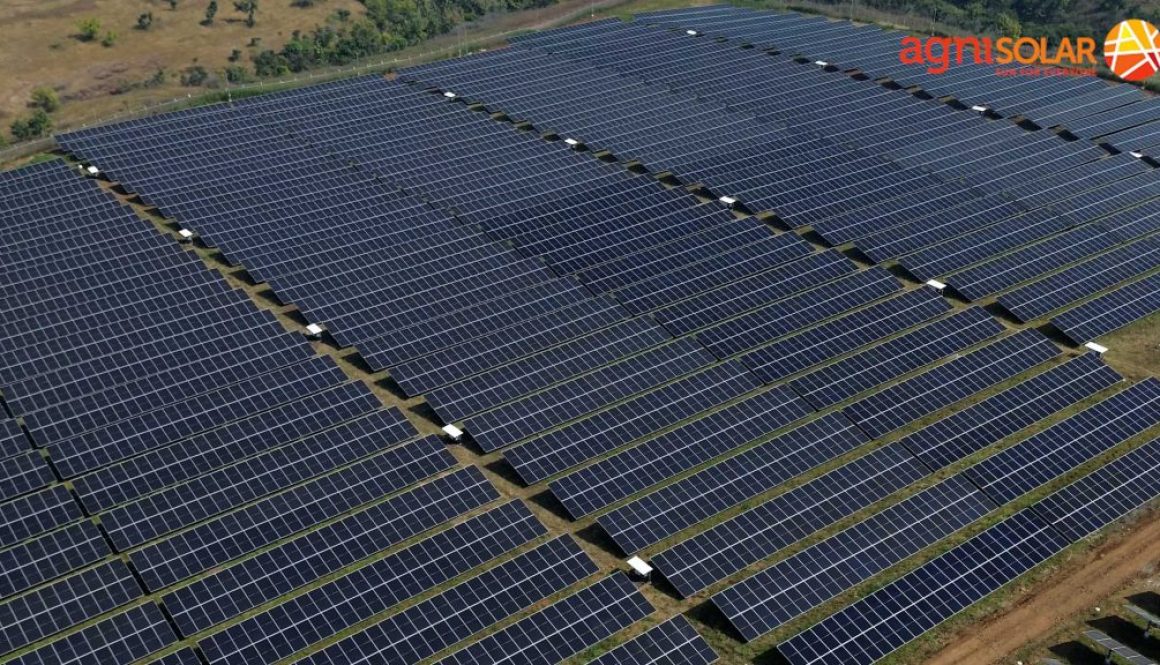
For years, this physical limitation prevented many organizations from maximizing renewable energy adoption. If the solar system could not fit on the roof, scaling clean energy became difficult. Today, that limitation no longer exists. Solar Open Access has transformed the way commercial and industrial (C&I) consumers procure electricity. Instead of being restricted by the physical boundaries of their premises, organizations can source solar power generated at large-scale solar farms located far away and receive that energy through the existing electricity grid. This shift has changed solar energy from a facility-level upgrade into a strategic energy procurement solution.
What Exactly is Solar Open Access?
At its core, Open Access is a regulatory framework that allows eligible electricity consumers to purchase power directly from private renewable energy generators instead of relying solely on the local distribution company (Discom). Established under the Electricity Act, 2003, this framework promotes market competition and consumer choice.
Think of the electricity grid as a vast network of highways. Traditionally, consumers could only purchase electricity supplied by their local utility. Open Access allows renewable energy generators to use the same grid infrastructure to deliver clean power directly to businesses and institutions. This model effectively separates where electricity is generated from where it is consumed, creating greater flexibility and scalability for renewable energy adoption.
How It Works: The Journey of Solar Power
The Open Access mechanism integrates seamlessly with existing grid infrastructure through four key steps:
- Generation: Electricity is generated at a utility-scale solar power plant located off-site in a region with favourable solar resources.
- Injection: The generated power is injected into the state or national transmission network.
- Wheeling: The grid facilitates the transfer of power from the generation point to the consumption point through a regulated process known as wheeling.
- Consumption and Accounting: The consumer continues drawing power through the grid while energy accounting mechanisms determine the amount of renewable energy supplied on their behalf. The entire process is governed by regulatory authorities to ensure transparency, reliability, and compliance.
The Financial Case: Grid Tariffs vs. Open Access Solar
Industrial and commercial users traditionally face high grid tariffs, which significantly impact operational expenses. In states like Maharashtra, traditional landed Discom tariffs are remarkably high:
- Industrial Consumers: Typically range around ₹8.44 / Unit
- Commercial Consumers: Can go up to ₹13.00 / Unit
By opting for renewable energy Open Access, C&I consumers can realize a straightforward savings of 40% to 50% on energy costs.
While Open Access Solar includes additional operational components—such as wheeling charges, transmission charges, and banking fees—the overall cost per unit remains highly favourable compared to traditional grid power. Furthermore, because Open Access relies on long-term Power Purchase Agreements (PPAs) typically signed for 25 years, it provides highly predictable pricing. This insulates businesses from price fluctuations driven by geopolitical factors and fossil fuel supply constraints, allowing for stable long-term financial planning and a clear, attractive payback period.
Understanding Energy Banking
One of the important concepts associated with Open Access is energy banking. Solar power generation occurs during daylight hours, while many facilities operate beyond solar generation periods. Energy banking enables excess electricity generated during the day to be credited and utilized later, subject to state-specific regulations and banking provisions. This flexibility helps consumers maximize renewable energy utilization and improve overall energy management.
Choosing the Right Open Access Model
One of the most important decisions when adopting Solar Open Access is selecting the appropriate ownership and procurement model. The choice directly impacts project economics, regulatory compliance, operational responsibilities, and long-term returns. While several structures exist in the market, the most commonly adopted models are Third-Party, Captive, and Group Captive Open Access.
1. Third-Party Open Access
Under the Third-Party Open Access model, the solar power plant is entirely owned, operated, and maintained by an independent power producer (IPP) or solar developer.
- Structure: The consumer does not invest capital in the generating asset. Instead, a long-term PPA is signed under which the consumer agrees to purchase electricity generated by the solar plant at a predetermined tariff.
- Pros: This arrangement is preferred by organizations that want to transition to renewable energy without making a significant capital investment. The developer assumes responsibility for project development, operation, maintenance, performance monitoring, and regulatory compliance. Businesses can focus on their core operations while the developer manages the entire energy asset lifecycle.
- Cons: Depending on applicable state regulations, certain surcharges and open access charges may apply, which influence the overall project economics.
2. Captive Open Access
A Captive Power Plant is a generating facility established primarily for the owner’s own electricity consumption.
- Structure: In a captive arrangement, a single company owns the generating asset and consumes the electricity produced by it. The objective is not to sell power commercially but rather to meet internal energy requirements.
- Pros: For organizations with substantial electricity demand and a long-term commitment to renewable energy, captive ownership provides complete control over power generation assets. Businesses benefit directly from the energy produced while maintaining ownership of the underlying infrastructure. It is highly attractive to large industrial consumers seeking long-term energy security and operational control.
- Cons: Captive ownership involves major responsibilities associated with project investment, asset management, regulatory compliance, and operational oversight. As a result, this model is generally adopted by organizations with significant resources necessary to manage long-term infrastructure investments.
3. Group Captive Open Access
Group Captive is one of the fastest-growing Open Access models because it combines many of the financial advantages of captive ownership with a more practical investment structure. Under a Group Captive arrangement, multiple consumers collectively own a generating asset while sharing the electricity generated by the project.
- Equity & Consumption Rules: To qualify as a Group Captive project under standard electricity regulations (such as those in India), the consumers must collectively hold at least 26% ownership in the generating company and collectively consume at least 51% of the electricity generated on an annual basis. These requirements must be maintained throughout the project’s operational life.
- Pros: The remaining ownership is typically held by the solar developer, who manages project development, operations, maintenance, and technical performance. This structure creates a balanced partnership. Consumers gain access to the benefits associated with captive power generation while avoiding the challenges of independently developing and operating a large utility-scale solar project. It offers an attractive combination of renewable energy adoption, long-term cost optimization, and participation in a professionally managed power asset.
Regulatory Spotlight: Progressive Amendments (e.g., MERC)
While national policies establish a broader framework for renewable energy procurement, Open Access implementation continues to vary across states. Factors such as banking provisions, wheeling arrangements, transmission charges, scheduling requirements, and approval processes can differ significantly depending on location.
Recent progressive state amendments—such as those by the Maharashtra Electricity Regulatory Commission (MERC)—demonstrate a highly positive regulatory outlook that removes historical barriers for C&I consumers:
- Lowered Eligibility Barriers: The minimum capacity restriction has been drastically revised from 1000 kW down to just 100 kW of Contract Demand or Sanctioned Load. This allows medium-sized enterprises to participate.
- Aggregated Micro-Sourcing: Under Third-Party Open Access, the 100-kW minimum requirement can be met either through a single meter or aggregated across multiple connections.
- No Load Limits for Captive Users: In the case of captive consumers, load limitations have been entirely removed.
- Simultaneous Rooftop & Open Access: Consumers with existing Rooftop Renewable Energy Generating Systems can now simultaneously avail of Open Access power. This allows facilities to maximize their clean energy mix without having to choose one over the other.
- Additional Surcharge Exemptions: Additional surcharges will not apply to Green Energy Open Access consumers, provided they are already paying their standard fixed charges to the distribution utility.
- Updated Banking Framework: Banking charges have been revised from 2% to 8%. While any surplus, unutilized banked energy lapses at the end of each banking cycle, generators are now entitled to receive Renewable Energy Certificates (RECs) to the extent of that lapsed energy.
The Strategic Benefits of Solar Open Access
- Scalability Beyond Rooftops: Perhaps the greatest advantage of Open Access is the ability to scale renewable energy procurement beyond physical space limitations. Whether a facility has limited roof area, structural constraints, or shading issues, access to large-scale solar generation remains possible.
- Long-Term Energy Planning and Cost Stability: Open Access allows organizations to adopt a structured and long-term approach to energy procurement. By securing renewable power through long-term agreements, businesses can improve financial forecasting, lock in stable tariffs, and strengthen energy management strategies.
- Supporting Sustainability & ESG Objectives: Environmental, Social, and Governance (ESG) commitments have become increasingly important for investors, customers, and stakeholders. Open Access enables organizations to significantly increase renewable energy usage, accelerate progress toward sustainability goals, and fast-track their corporate path to Net Zero.
- Enhanced Energy Resilience and Independence: Diversifying electricity procurement through off-site renewable energy sources improves overall energy resilience, reduces dependence on conventional centralized power sources, and mitigates the risk of localized grid outages or fuel supply disruptions.
- Systemic Technical and Macro Benefits: Distributed, utility-scale generation reduces transmission and distribution (T&D) losses, ensuring more efficient energy delivery. Furthermore, the rising open access participation drives technological innovations (like digital metering and AI-based energy forecasting) and spurs local job creation across engineering, EPC, and O&M functions.
Important Considerations Before Adopting Open Access
Open Access offers significant opportunities, but successful implementation requires careful planning. Organizations should conduct a detailed technical and regulatory assessment to evaluate:
- Long-term electricity consumption patterns
- Contract demand and eligibility requirements
- Applicable state-specific regulatory frameworks and approval requirements
- Banking and scheduling provisions
- Future expansion plans
- Appropriate commercial structures (Third-Party vs. Group Captive)
A successful Open Access strategy is not simply about sourcing renewable power. It is about leveraging expert planning, energy audits, and customized solar solutions to build a scalable, reliable, and future-ready energy roadmap.
Frequently Asked Questions
Who can avail Solar Open Access?
Eligibility requirements vary by state, but Open Access is generally designed for commercial, industrial, and institutional consumers with significant electricity demand. Progressive rules have lowered eligibility thresholds (down to 100 kW in states like Maharashtra) to allow broader participation.
What is the difference between Group Captive and Third-Party Open Access?
Group Captive involves active consumer participation in the equity and ownership structure of the generating asset (holding at least 26% equity and consuming 51% of power), while Third-Party Open Access allows consumers to purchase electricity directly from an independent developer without any capital investment.
Can Open Access be used along with rooftop solar? Yes. Many organizations combine rooftop solar installations with Open Access procurement to maximize their renewable energy utilization.
Does Open Access require additional infrastructure at the consumer site? In most cases, no major infrastructural changes are needed. The primary requirements involve advanced metering, regulatory compliance, and energy accounting mechanisms, as the electricity is seamlessly delivered through the existing grid network.
Looking Beyond the Rooftop
The traditional perception of solar energy as a rooftop-only solution is rapidly evolving. As sustainability becomes a business imperative and energy strategy plays an increasingly important role in organizational success, businesses require solutions that can grow alongside their operations.
Solar Open Access removes one of the most significant barriers to renewable energy adoption: the limitation of available rooftop space. By connecting consumers to utility-scale solar generation through the existing grid, it enables access to clean energy at a scale that matches real-world operational requirements.
Whether you operate a manufacturing facility, educational institution, healthcare campus, commercial complex, industrial park, or data center, Open Access provides a practical pathway toward sustainable growth, stronger energy resilience, and long-term environmental leadership. The future of renewable energy is no longer defined by the size of a roof. It is defined by the ability to strategically access clean power wherever it can be generated most efficiently. Organizations that embrace this shift today will be better positioned to navigate tomorrow’s energy landscape with confidence, competitiveness, and a lasting commitment to sustainability.