
Commercial & Industrial (C&I) Solar Solutions
Commercial & Industrial (C&I) Solar Solutions
Reduce energy costs, improve sustainability, and gain greater control over your power expenses with Agni Solar’s Commercial & Industrial (C&I) Solar Solutions. With over 30 years of experience in solar energy, we help factories, warehouses, manufacturing units, offices, hotels, educational institutions, and commercial establishments transition to reliable and cost-effective solar power. Our solutions are customized to match your energy consumption patterns, available space, and financial objectives.
From rooftop solar systems and solar carports to open access solar solutions and long-term operations & maintenance support, Agni Solar provides end-to-end expertise to maximize your return on investment. Whether your goal is reducing electricity bills, meeting ESG commitments, or improving energy security, our team delivers high-quality solar solutions designed for long-term performance and measurable business value.
Frequently Asked Questions
Commercial solar can significantly reduce monthly electricity bills by generating power on-site. Savings depend on roof space, sanctioned load, tariff, and system size.
The cost depends on system capacity, panel type, inverter selection, mounting structure, and electrical work. A proper site survey helps provide an accurate cost estimate.
Installation timelines vary based on project size, approvals, roof condition, and material availability. Most commercial projects follow stages such as design, procurement, installation, testing, and commissioning.
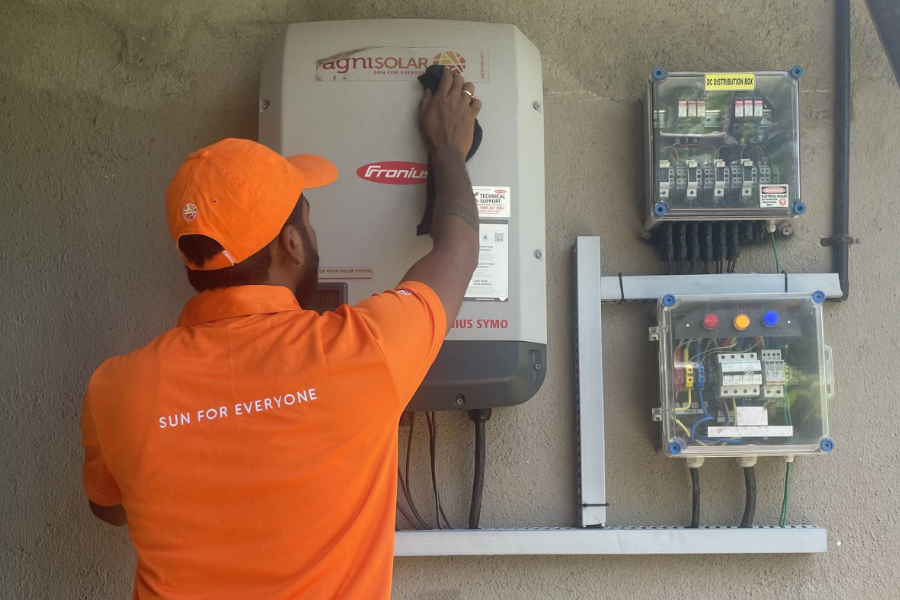
Commercial solar systems require periodic panel cleaning, inspection of electrical components, inverter checks, and performance monitoring. Regular maintenance ensures better generation and longer system life.
Net metering allows businesses to export excess solar power to the grid and receive billing adjustments. This improves overall savings and helps maximize solar energy utilization.
A well-installed solar system can improve a commercial property’s value by reducing operating costs. It also strengthens the building’s sustainability profile for tenants, investors, and buyers.
Industrial solar can reduce high electricity expenses by offsetting daytime energy consumption. Savings are usually higher for factories and warehouses with large roof areas and heavy power usage.
The best panel depends on available space, energy requirement, roof type, and budget. High-efficiency modules are often preferred for industrial sites with limited space and high load demand.
Solar generates power during daylight hours, but 24/7 support may require battery storage or grid backup. A hybrid solution can improve reliability and reduce grid dependence.
Not always, but the roof must be structurally strong and suitable for mounting. A feasibility and structural assessment helps identify repair or reinforcement needs before installation.
Space requirement depends on the system capacity and panel efficiency. Industrial rooftops, sheds, parking areas, or ground-mounted spaces can be evaluated for solar installation.
Standard grid-tied solar systems shut down during outages for safety reasons. Backup power requires additional solutions such as battery storage or hybrid inverter systems.
C&I Solar stands for Commercial and Industrial Solar, designed for businesses, factories, warehouses, institutions, and large facilities. It helps reduce operating costs through on-site clean energy generation.
Any business with suitable electricity consumption and available installation space can be evaluated for C&I solar. Eligibility depends on load profile, roof condition, approvals, and financial feasibility.
Government policies and incentives can reduce the effective project cost for eligible businesses. The applicable benefit depends on location, business category, project type, and current regulations.
Businesses can explore options such as loans, leasing, CAPEX, OPEX, or power purchase agreements. The right model depends on cash flow, ownership preference, and long-term savings goals.
Solar is integrated with the existing electrical infrastructure through inverters, protection systems, and grid synchronization. Proper engineering ensures safety, compliance, and stable performance.
Yes, many C&I solar systems can be designed for future expansion. This depends on available space, inverter capacity, electrical infrastructure, and regulatory permissions.
Remote monitoring platforms track generation, savings, system health, and performance trends. This helps identify faults early and ensures the system delivers expected output.
Businesses should ask about system capacity, warranties, generation estimates, payment terms, approvals, maintenance, and performance guarantees. A clear contract reduces risk and avoids hidden costs.